

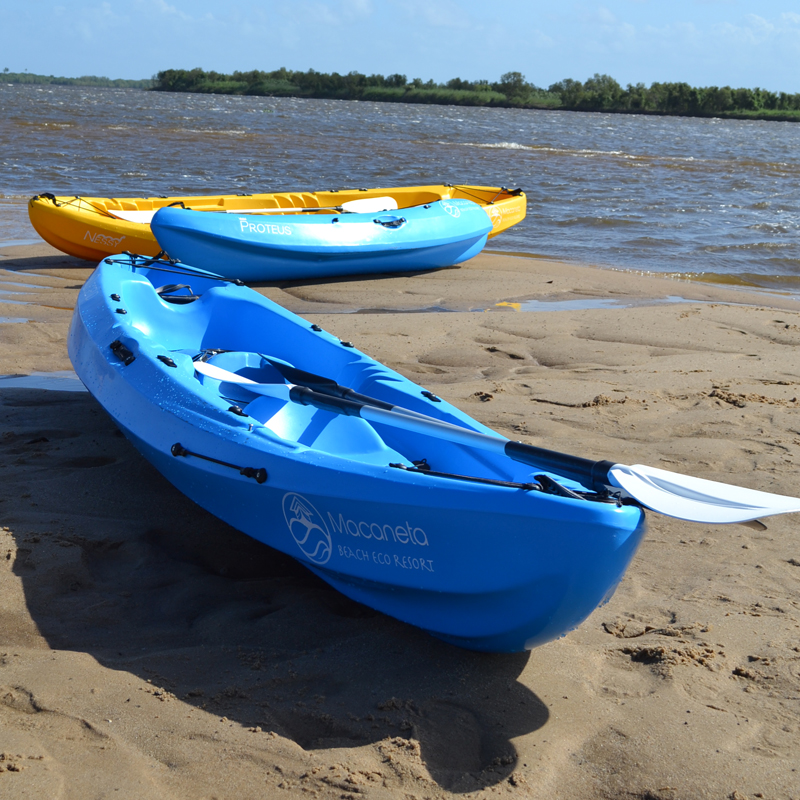
Image note: Kayak images feature selected models from Legend Kayaks (KwaZulu-Natal, South Africa), photographed at Macaneta Beach Eco Resort, Mozambique.
Kayaking – One of the Most Eco-Friendly Water Sports
In a world where many outdoor activities rely on engines, fuel, and heavy infrastructure, kayaking stands out for a simple reason: it moves at the speed of nature.
Kayaking offers access to rivers, coastlines, estuaries, and lakes with minimal environmental disturbance, making it one of the lowest-impact ways to experience water environments. But why exactly is kayaking considered an eco-friendly water sport, and what should conscious adventurers consider before getting on the water?
Let’s break it down.
Human-Powered, Zero Emissions
At its core, kayaking is powered entirely by the paddler.
No fuel.
No exhaust.
No noise pollution.
Unlike jet skis, speedboats, or motorised watercraft, kayaks produce zero direct carbon emissions during use. This makes them particularly well-suited to sensitive ecosystems such as wetlands, estuaries, mangroves, and marine reserves, areas where engine noise and fuel leakage can disrupt wildlife and water quality.
For paddlers, this also means a deeper, quieter connection with nature, one where dolphins, birds, and fish are far more likely to carry on undisturbed.
Minimal Disturbance to Wildlife
Kayaks sit low in the water, move slowly, and create very little wake. This has real ecological benefits:
- Reduced shoreline erosion compared to motorboats
- Less disruption to nesting birds and aquatic species
- Lower stress on marine mammals sensitive to sound and vibration
When used responsibly, keeping distance from wildlife and avoiding sensitive breeding areas, kayaking allows humans to observe rather than intrude.
This low-impact interaction is one of the main reasons kayaks are often permitted in protected waterways where motorised craft are restricted or banned.
Low Infrastructure Requirements
Many water sports rely on marinas, fuel docks, boat ramps, and storage facilities that permanently alter coastlines and riverbanks.
Kayaking doesn’t.
A kayak can be launched from:
- A quiet beach
- A riverbank
- A slipway
- Even carried short distances by hand
This reduces the need for concrete structures, dredging, or shoreline modification, all of which can have long-term ecological consequences.
For regions like South Africa, where access to wild coastlines and rivers is both precious and contested, this matters.
Long Lifespan, Low Operating Footprint
From a lifecycle perspective, kayaks tend to be durable, repairable, and long-lasting.
A well-made kayak can last:
- 10–20 years with regular use
- Even longer with proper storage and maintenance
There are no engines to service, no fuel systems to replace, and no consumables required beyond basic safety gear. This dramatically lowers the ongoing environmental cost of participation compared to many other water sports.
That said, not all kayaks are created equal, materials and manufacturing still matter (more on that below).
Encourages Environmental Awareness
Kayaking naturally places people inside ecosystems rather than above or speeding through them.
Paddlers often become:
- More aware of water quality
- More invested in river and ocean health
- More likely to notice pollution, invasive species, or habitat degradation
Many conservation groups, researchers, and citizen science projects actually use kayaks for monitoring and clean-up efforts, a testament to their practicality and low impact.
Simply put: kayaking tends to turn users into stewards, not just consumers of nature.
The Sustainability Caveat: Materials Matter
While kayaking as an activity is low-impact, the production of kayaks is where environmental considerations become more complex.
Most kayaks are made from:
- Polyethylene plastic (durable, but fossil-fuel based)
- Fibreglass or composites (lightweight, but energy-intensive to produce)
- In rare cases, recycled or bio-based materials
For conscious paddlers, key things to look for include:
- Durable designs built to last
- Brands that offer repair services or replacement parts
- Transparency around manufacturing and materials
- Local or regional availability to reduce shipping impact
At Eco Instincts, longevity and repairability carry significant weight, because the most sustainable kayak is the one that doesn’t need replacing.
A Water Sport That Scales With Responsibility
Kayaking is accessible to beginners, adaptable to different fitness levels, and suitable for everything from flatwater exploration to multi-day expeditions. That scalability means people can grow with the sport rather than constantly upgrading equipment.
It also makes kayaking a powerful alternative for those looking to enjoy water-based adventure without contributing to:
- Fuel pollution
- Noise-heavy recreation
- Infrastructure-heavy tourism
Final Thoughts
Kayaking isn’t eco-friendly because it’s trendy, it’s eco-friendly because it aligns naturally with how water ecosystems function.
Quiet.
Slow.
Human-powered.
Low-impact.
When paired with responsible behaviour and thoughtfully chosen equipment, kayaking offers a rare combination: meaningful outdoor adventure with a genuinely light environmental footprint.
For those seeking to explore rivers, lakes, and coastlines while protecting what makes them special, kayaking isn’t just an alternative, it’s one of the best options available.